
The Global Fan's Guide to Football 2026 World Cup
Football 2026 World Cup is FIFA’s expanded men’s tournament, hosted across Canada, Mexico, and the United States from June 11 to July 19, Forty-eight national teams will play 104 matches in 16 host ci...
The Global Fan's Guide to Football 2026 World Cup
Football 2026 World Cup is FIFA’s expanded men’s tournament, hosted across Canada, Mexico, and the United States from June 11 to July 19, 2026. Forty-eight national teams will play 104 matches in 16 host cities, making this the largest World Cup by team count and match volume in history. The opening match is scheduled for Mexico City, while the final will be staged at MetLife Stadium in the New York–New Jersey region. Canada will use Toronto and Vancouver, Mexico will use Mexico City, Guadalajara, and Monterrey, and the United States will provide 11 venues, including Atlanta, Los Angeles, Miami, Dallas, and Seattle. The key takeaway is simple: plan by host city first, then study the group draw, travel distances, kickoff times, and team form before making match predictions.
The Bottom Line
The 2026 World Cup is a 48-team tournament across 3 countries, 16 cities, and 104 matches, with the final hosted in the New York–New Jersey area. That structure creates more football, more travel, and a far wider tactical field than the traditional 32-team format.
The first 2 places in every group will advance, joined by the 8 best third-place teams. The knockout stage will therefore begin with 32 teams, not 16, and the eventual champion must win 8 matches if it starts in the group phase and reaches the final. FIFA’s official competition information is available through the FIFA World Cup 2026 official website, which should remain the main reference for schedules, ticket notices, and confirmed regulations.
This is not a small adjustment. The tournament adds 16 teams and 40 matches compared with Qatar 2022. It also stretches from Vancouver on the Pacific coast to Miami on the Atlantic, with major time-zone changes between venues. A supporter following one team may face a journey of more than 4,000 kilometres between matches, depending on the draw. That is why Tactical Review will focus on more than scorelines: team tactics, player statistics, travel load, weather, squad rotation, and market movement will all matter.
For responsible readers using football analysis alongside sports wagering, one rule stands above the rest: predictions are opinions, not guarantees. Check local laws, use only regulated services where available, and never risk money needed for ordinary expenses.
Would you like a clearer tournament overview before the fixtures arrive?
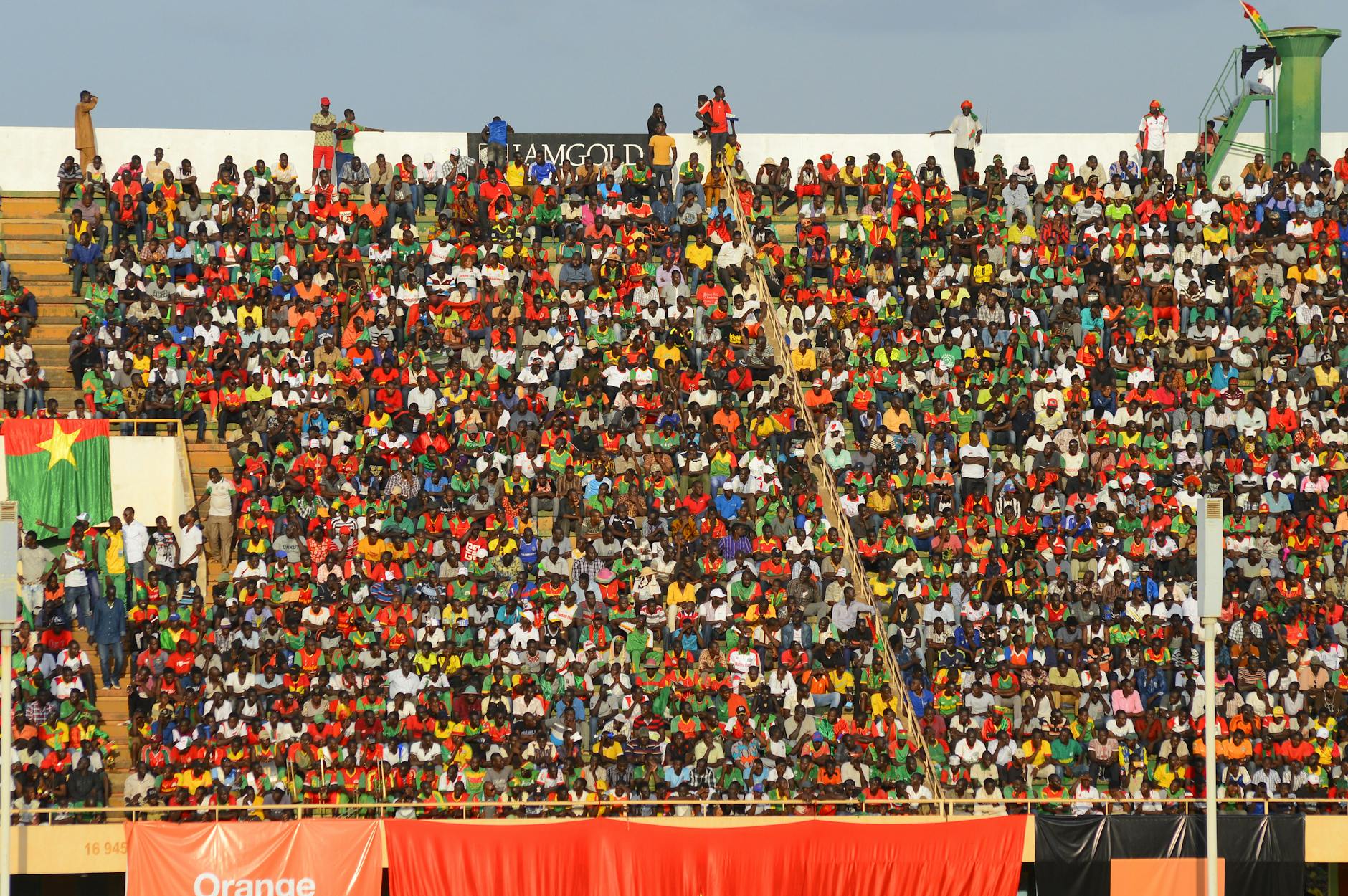
Photo by Ole Dahl Rasmussen on Pexels
What Players Actually See
Players will experience a tournament shaped by heat, distance, artificial travel pressure, and unfamiliar match rhythms. The 16 venues are not interchangeable: Mexico City sits at high altitude, Atlanta can bring intense summer humidity, Seattle offers a different climate profile, and Dallas, Houston, Miami, and Los Angeles may expose teams to substantial heat. Match conditions can alter pressing intensity, recovery speed, substitution timing, and the value of controlling possession.
A national team also sees a different competition from the one presented to television viewers. Coaches must manage flights, hotel changes, training access, sleep schedules, and squad freshness. For example, a high-energy side built around aggressive pressing may look excellent in its first match but lose sharpness after long travel and short recovery windows. A possession team may benefit from slower games, yet struggle if the opponent turns every transition into a 30-metre sprint.
The expanded format creates another tactical problem. Some teams may calculate that 4 points are enough to qualify from their group, while others may need a victory in the final round. That changes risk. A coach protecting a draw may lower the defensive line and remove an attacker after 70 minutes; a team chasing goal difference may continue attacking at 2–0. The best tournament analysts will therefore examine game state, not just final results. A 1–0 win built on 0.7 expected goals tells a different story from a 1–0 win built on 2.4 expected goals.
Tactical Review’s match work will track formation changes, pressing triggers, progressive passes, set-piece routines, and player workloads. Readers looking for foundational terminology can also use this [Internal Link: football tactics and formations guide] before comparing teams.
What Are the 3 Things That Matter Most?
The 3 biggest 2026 World Cup factors are tournament structure, travel and climate, and tactical adaptability. These variables influence qualification chances more reliably than reputation alone, especially when 48 teams create unfamiliar group combinations.
1. Group mathematics
The 2026 group stage is expected to contain 12 groups of 4 teams. Each side plays 3 group matches, and the top 2 teams plus the 8 strongest third-place finishers advance. This makes the table more complicated than a simple “win twice and qualify” formula because goal difference, goals scored, disciplinary records, and other official tie-break procedures may become decisive.
A team with 6 points should normally be in a strong position, but 4 points may be enough or may leave it exposed. A 1–0 win and a 4–0 win both produce 3 points, yet the second result can become valuable if multiple teams finish level. Coaches may also manage yellow cards late in the group phase if disciplinary records are part of the tie-break sequence. Fans should read the official FIFA regulations rather than rely on social-media summaries.
2. Travel and recovery
The host geography is enormous. Canada, Mexico, and the United States cover several time zones, and the United States alone includes 11 host cities. A team moving from Seattle to Miami crosses roughly 4,300 kilometres, although the actual route and schedule will differ by team. That distance is not trivia; it can affect sleep, training duration, hydration, and muscle recovery.
The practical edge is to compare rest days between matches. A side with 4 full recovery days may hold its press longer than a side with only 3, particularly in humid conditions. Sports scientists generally treat sleep disruption and travel as performance concerns, but football teams respond differently depending on squad depth and medical planning. The United States Soccer Federation and host-city organizers will be important sources for venue and operational updates.
3. Tactical flexibility
A tournament is not won by one formation printed on a team sheet. Champions usually switch between a 4-3-3, 4-2-3-1, 3-4-2-1, or in-possession back-three structure depending on the opponent. The crucial question is whether the change preserves defensive cover while creating enough attacking threat.
A useful test is to inspect three moments: what happens after the team loses the ball, how it defends crosses, and whether the midfield can escape pressure. A team may dominate against a low block but collapse when opponents attack the space behind its full-backs. Another side may defend beautifully in a compact 5-4-1 yet lack a reliable route to create chances. These patterns are more predictive than a famous badge or a striker’s highlight reel.
Here is the working checklist for each match:
- Compare expected goals and shots on target over the previous 5 competitive matches.
- Check injuries, suspensions, probable rotation, and minutes played by key starters.
- Measure travel distance, local kickoff time, weather, and recovery days.
- Identify whether the opponent presses high, defends deep, or changes shape during transitions.
- Separate confirmed information from rumours before forming a prediction.
Want a more disciplined way to assess teams and players?
Edge Cases & Gotchas
The most dangerous mistake is treating every 2026 World Cup match as a normal club fixture. National teams have less training time, players arrive from different tactical systems, and a manager may have only a few days to correct a structural weakness. A strong club partnership does not automatically become a strong national-team partnership.
One underappreciated edge case is the third-place table. In a 48-team tournament, teams may qualify with different point totals, and goal difference could carry enormous weight. A late concession in the 88th minute may matter beyond the result because it can reduce a team’s ranking against third-place rivals in other groups. Fans should save the full table, not only the group winner.
Another issue is kickoff timing. A 7 p.m. local match in Los Angeles is not the same physiological experience as an afternoon match in Monterrey or an evening fixture in Toronto. Broadcast schedules may prioritize global audiences, but local heat and humidity still shape tempo. The National Weather Service can provide official United States forecasts, while Environment and Climate Change Canada and Mexico’s Servicio Meteorológico Nacional cover their respective markets.
There is also a data trap. Small samples become noisy when a team plays only 3 group matches. A striker with 4 goals from 5 shots may be finishing brilliantly, or simply benefiting from short-term variance. A goalkeeper with a 90% save rate across 2 games should not automatically be called the tournament’s best goalkeeper. Our recommended approach is to combine at least 5 competitive matches with role, shot quality, opponent strength, and minutes played.
For supporters planning a multi-city trip, budget beyond match tickets. Accommodation prices can rise sharply around knockout fixtures, domestic flights may tighten, and stadium security rules can restrict bags, batteries, and outside food. Official host-city pages, FIFA notices, airline policies, and venue instructions should be checked separately because one source rarely covers every practical detail.
Read the wider planning advice through this [Internal Link: World Cup travel and matchday planning guide], especially if you intend to attend matches in more than one country.
A contrarian conclusion deserves attention: the expanded format may reward controlled football more than spectacular football during the group phase. The reason is mathematical. With 3 matches and 32 knockout places, a team may prioritize avoiding defeat before chasing a high-risk victory. That does not guarantee dull games, but it increases the value of game management, substitutions, and set pieces.
Here is the operational edge many previews miss: do not compare raw possession across cities and opponents without checking match state. A team leading 1–0 may record 42% possession because it deliberately defends space; another may record 68% while creating almost nothing. Possession without territory, chance quality, and defensive control is a vanity number. The hard truth is brutal: the scoreboard matters, but the process explains whether the scoreboard is repeatable.
How Should Fans Follow the 2026 World Cup?
Fans should follow the 2026 World Cup in three stages: confirm the official schedule, build a team-information file, and reassess every match after lineups are announced. This approach reduces errors caused by outdated fixtures, injuries, travel assumptions, and unverified social-media reports.
First, record each team’s group, host city, local kickoff time, travel route, and rest interval. Then track squad news from official federation channels, FIFA, reputable football media, and verified manager press conferences. Finally, compare the starting XI with the tactical plan: a missing holding midfielder may matter more than a missing winger if the opponent attacks through central transitions.
A useful pre-match file should include:
- The last 5 competitive results, separated by home and away context.
- Expected goals for and against, where reliable data is available.
- Set-piece goals scored and conceded.
- Minutes played by the 10 most important players.
- Confirmed injuries, suspensions, and squad changes.
- The team’s response after conceding first.
- The likely substitution pattern after the 60th minute.
For readers considering football wagering, the same structure is essential but must be paired with strict financial controls. Compare prices only through legal, regulated operators in your jurisdiction, check the terms before placing any wager, and never treat a prediction as a promise. A bookmaker’s market may reflect injuries, public sentiment, and liquidity faster than a casual preview, but it can still be wrong; your job is to identify evidence, not manufacture certainty.
Get the latest analysis and tournament context from Tactical Review.
Verdict
The 2026 World Cup will be the biggest football tournament FIFA has staged: 48 teams, 104 matches, 16 host cities, and 3 host nations. Its central challenge is not merely predicting which famous team wins; it is understanding how group mathematics, climate, travel, recovery, tactical flexibility, and squad depth interact over 39 days of competition. Atlanta’s Mercedes-Benz Stadium, Los Angeles, Mexico City, Toronto, Miami, Seattle, and the New York–New Jersey final venue will each create different matchday conditions.
The strongest analysis will combine data with context. Use recent form, but do not worship it. Use expected goals, but inspect the quality of those chances. Study player statistics, but account for role and opponent strength. Most importantly, wait for confirmed lineups when a key midfielder, centre-back, or goalkeeper could change the match’s entire structure.
Tactical Review will follow the tournament through predictions, tactical breakdowns, player statistics, and daily 2026 World Cup coverage. For readers, the winning habit is simple: verify the facts, respect the uncertainty, and make decisions only within a responsible budget.
Ready to follow every major tactical development?
Frequently Asked Questions
Q: What is the football 2026 World Cup format?
A: The football 2026 World Cup will feature 48 teams divided into 12 groups of 4, with 32 teams advancing to the knockout stage. The top 2 teams in each group qualify, along with the 8 best third-place teams. FIFA has expanded the tournament from 64 matches in the 32-team era to 104 matches, creating a longer and more complex competition.
Q: When and where will the 2026 World Cup take place?
A: The 2026 World Cup is scheduled to run from June 11 to July 19, 2026, across Canada, Mexico, and the United States. The host cities include Toronto, Vancouver, Mexico City, Guadalajara, Monterrey, Atlanta, Los Angeles, Miami, Dallas, Seattle, and other United States venues. The opening match is planned for Mexico City, while the final is scheduled for the New York–New Jersey region.
Q: How can I follow a team during the 2026 World Cup?
A: Follow the official FIFA schedule first, then monitor federation announcements, confirmed lineups, injuries, travel, and local kickoff conditions. Build a simple file containing the team’s previous 5 competitive matches, expected-goal trends, set-piece record, and likely formation. Recheck the information after the starting XI is announced because one absent holding midfielder can change a team’s entire defensive structure.
Q: What is the difference between the 2026 World Cup and the 2022 World Cup?
A: The main difference is the tournament size: 2026 will have 48 teams and 104 matches, while Qatar 2022 had 32 teams and 64 matches. The 2026 edition is also jointly hosted by Canada, Mexico, and the United States instead of being held in one country. That creates longer travel routes, more host venues, more time-zone changes, and a more complicated third-place qualification table.
Q: Is the expanded 48-team World Cup worth watching?
A: Yes, the expanded World Cup should offer more matches, more nations, and a wider range of tactical styles, although the group-stage mathematics may produce cautious games. Additional places allow teams from more regions to compete on the global stage, while 104 matches provide a substantial amount of content for fans. The main drawback is travel and schedule complexity, so viewers should use official local kickoff times rather than relying on generic listings.
Q: What should I do if World Cup information online conflicts?
A: Treat FIFA, national football federations, host-city authorities, and official venue notices as the primary sources. Confirm the publication date because ticket policies, kickoff times, security rules, and travel guidance can change before June 2026. If a prediction article conflicts with an official lineup or schedule announcement, the official announcement should take priority.
Q: How much should I risk on football World Cup predictions?
A: You should risk only money you can afford to lose, and only through legal, regulated services available in your location. Set a fixed entertainment budget before the tournament, avoid chasing losses, and never borrow money to wager. Tactical analysis can improve decision quality, but no model can remove uncertainty from injuries, red cards, refereeing decisions, finishing variance, or unexpected tactical changes.